


By Meghan Ellis
What would a character do upon confronting their author? Think of your favorite stories. Would the hero thank their creator for their trials and tribulations? Perhaps, but they might take the chance to air their complaints instead, and give this merciless figure a taste of their own medicine.

This question is the premise behind Death of the Author, a journaling TTRPG experience from Sam Leigh of Blinking Birch Games. Through tarot cards and chapter-based prompts, players will explore a struggle between authorial intent and narrative agency. Played either solo or with two players, this is a no-prep-required game that can be enjoyed in a single afternoon.
If you’ve ever wanted to rescue a character from their creator, Death of the Author hands you the scissors with which to cut the puppet strings.
Narrative tyranny
The phrase ‘death of the author’ strikes fear into the hearts of writers and critics alike, but as the subject of the oft-misunderstood essay of the same name, rather than the possibility of bodily harm. Very simplified, Barthes’ essay argues that our interpretation of a work should come from within, rather than relying on an ultimate meaning as intended by the author.
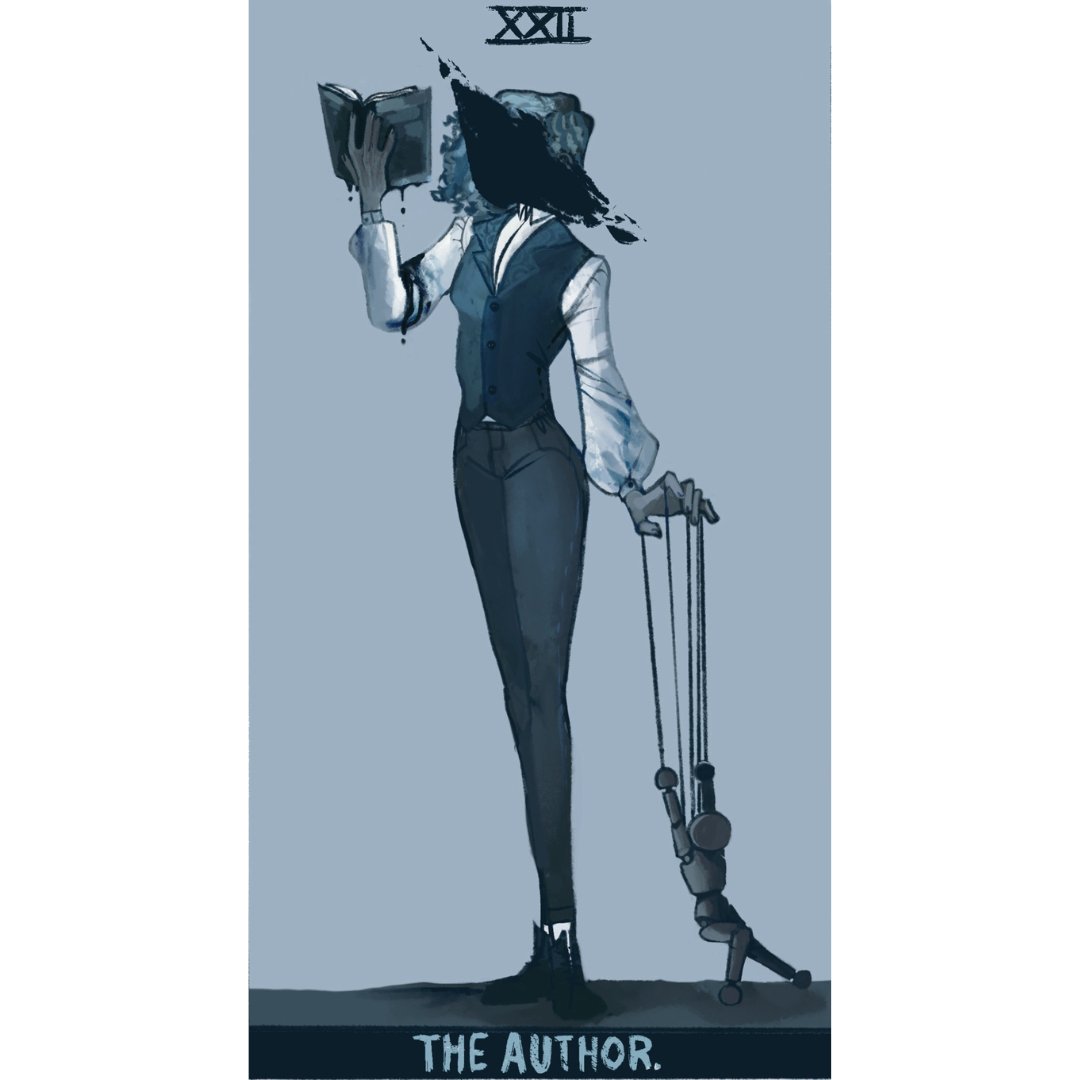
In short, the audience decides the meaning, not the creator. Death of the Author takes this concept even further, by allowing the player to shape their interpretation of the story directly. As a writer myself, this play on narrative agency immediately grabbed my attention. Especially as, despite careful wording to imply otherwise, a solo session will see the player as both character and author.
So, how do you confront yourself? To borrow a phrase from Brandon Sanderson, Death of the Author requires its players to Read and Find Out.
As a nod to its subject matter, the game is laid out like a novel, and is split into five chapters. Four of these follow the traditional structure of a story: the prologue, then an exposition, rising action, and finally the climax. These first four chapters are where the character fights for narrative control, by experiencing three scenes - chosen by tarot via a list of scene prompts - and then either obeying or denying the flow of these story fragments.
In the fifth and final chapter, the player confronts the author directly. Whether they were tyrannical or simply misunderstood, the game ends after the final page has been turned.

An exercise in ambiance
Solo journaling games rely upon a certain level of buy-in from the player. This genre is often light on rules and heavy on ambience; titles like The Librarian’s Apprentice, for example, give the player a huge amount of freedom, based on the knowledge that a solo player is more likely to respond well to opportunities for creativity than restrictive rules.
Death of the Author builds its core gameplay loop around this understanding. There are no dice rolls, no combat encounters, no pre-written scenarios. Everything revolves around the player’s unique position on both sides of the conflict, aided by several lists of scene prompts and use of a tarot deck for symbolic randomness.
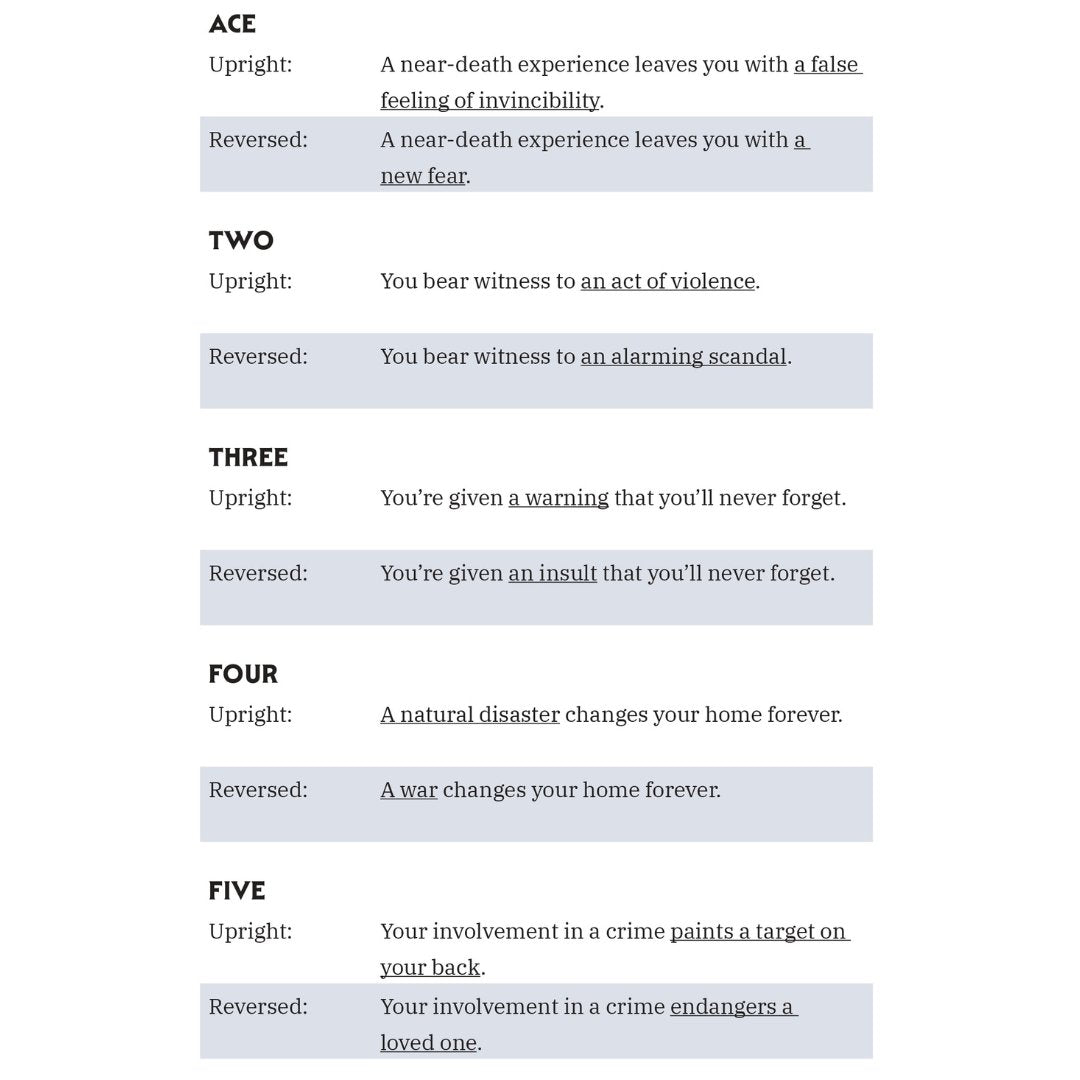
At the beginning of each chapter, three separate scene cards are drawn from the tarot deck. These come from the Minor Arcana deck - which, if you’re not familiar with tarot, are the cards resembling a traditional set of suit cards - and can be either upright or reversed according to pre-game shuffling. With Death of the Author operating as a hack of Leigh’s other TTRPG Anamnesis, this is where the player agency comes in, by allowing the character to modify these randomly-chosen scene prompts.
Each chapter, the character will get one Defiance and one Reversal: defying the prompt allows you to rewrite it, and reversing the prompt allows you to choose the alternative prompt option for your chosen card. They don’t carry over between chapters, so use it or lose it.
The fantasy of cartomancy
I’ve been reading a lot of historical fantasy recently, and so I felt drawn to that as the setting for my playthrough. As a genre it segues in quite nicely with the visuals associated with tarot cards, but Death of the Author is equally equipped for a science fiction tale, a modern drama, horror, or indeed any genre you fancy working with. Sure, scene prompts might talk about receiving letters or hearing sirens, but if those don’t work for the story then you can simply tweak them.
You’re the Author, after all.
When preparing to play, you’ll draw a spread of characters from the Major Arcana deck. These will be the main characters of the story, namely you, your friend, and your foe, and they remain in place for the duration of the game. For my part I drew the following three tarot cards: the Empress Reversed for my character, the Justice Upright for my friend, and the High Priestess Upright for my foe. To me (with a little help from online tarot interpretations) that sounded like a recipe for a classic historical fantasy of a wronged monarch, their upright chamberlain, and the ambitious new figure in the palace trying to bring said Empress down.
With the Minor Arcana deck featuring such fanciful suits as wands, sword and pentacles, I knew there had to be a clash between forces of might and magic. Tropes are tropes for a reason!
Don’t worry if tarot is an unfamiliar resource; outside of their use as a tool for TTRPGs, I’m not an aficionado either, and the rules do a great job of reassuring players that interpretation is entirely subjective. Whether you want to establish meaning through the pictures, the cartomancy behind the cards, or their use as fortune-telling tools, Death of the Author accepts any and all of the above as valid.
What’s even more interesting, however, is the way that the tarot cards themselves have been incorporated into the game. Leigh has separated out the Major and Minor Arcana decks, a choice that resonates with the meta narrative of the story. The Character is restricted to using the Minor Arcana, which is the greater share of cards by far. The Author gets to play with the Major Arcana, which are the exciting cards we associate with Tarot: Death, the Hanged Man, the World, etc.
This is a strictly-enforced split, and I think it’s a clever way to reinforce the imbalanced power dynamic between you-as-character and you-as-author. The Character might have more cards at their disposal, but the Author has the winning hand. Or do they?

After the end
If I had one thing I’d like to see Death of the Author do differently, it would revolve around the Resolution, the fifth and final chapter of the game. The story was over. My Empress had triumphed and avoided her bad ending, and now it was time to take the fight through the fourth wall. I turned the page, expecting a satisfying new mechanic for this conclusion, but… it’s far more nebulous, and relies more on that player buy-in that I mentioned than actual gameplay.
At the beginning of the book it does mention that the final chapter plays differently, so I had no idea what was likely to happen. I won’t go into specifics - I think it works best as a surprise - but personally, I wanted more direction about the nature of the confrontation than was written. I’m a sucker for a good table, and I think we could’ve had one here, perhaps focused around the Author’s sacrosanct Major Arcana. That said, what is written allows for a good final punch-up. Or, if you’re inclined, a reconciliation; the conflict is designed as a confrontation, but that’s not the only way to end things.
Ultimately, Death of the Author is a game about making those decisions, so it’s not a dealbreaker to have a finale that relies on vibes. It could even present an opportunity: I’m certainly going to replay with a new scenario, so next time I might create a table in advance, or take inspiration from a toolkit or other RPG aid.

A tool for your arsenal
Actually, this might be the true value of Death of the Author. Anamnesis felt like a way to get to know a character. This hack looks at the bigger picture, by forcing you into the mind of both Author and Character and exploring how you operate as a creative.
In the course of working through the chapters, I discovered a bit of a tendency to be too mean to my villains and too kind to my heroes. Stories are often at their most exciting when there’s peril involved, and it was interesting to see the lengths I went to to subvert that. The main takeaway is that I need to be meaner, a lesson I’m sure my D&D players will love next time I throw them into combat.
To that end, I think Death of the Author could be a useful tool for writers and creatives of all persuasions. I could see it working as a test site for a campaign scenario, or as a sort of self-beta read of a fiction piece. There are a few good lessons to be had around suspending your disbelief, working through writer’s block, and sticking the landing to a story. Plus, it’s always fun to put your beloved characters into ‘Situations’.
But maybe we should stop trying to kill our darlings, lest they fight back.


Comments (0)
There are no comments for this article. Be the first one to leave a message!